Note
✅ Status update (5 November 2026): The Kashmir Great Lakes trek and the Tarsar Marsar trek are open. This was verified by the Travelihood team on the ground. Conditions in Kashmir can change at short notice, so check with your hotel, driver or operator before you set out. Trek season normally runs from late June to mid-September. Book treks only with a registered operator.
Most travelers associate July and August in India with torrential monsoon downpours, flooding, and travel warnings across Himachal Pradesh and Uttarakhand. However, many are surprised to learn that Kashmir experiences the Indian monsoon very differently.
Because the towering Pir Panjal mountain range acts as a colossal geographic barricade, it blocks the bulk of moisture-laden clouds drifting north from the Arabian Sea and Bay of Bengal. As a result, the Kashmir Valley receives significantly less rainfall than Jammu, Shimla, or Manali.
However, monsoon travel in Kashmir is not entirely rain-free. Highway access points, high mountain passes, and riverbanks require smart itinerary planning. Here is your ground-truth guide to visiting Kashmir during July and August.
Quick Facts
| Parameter | Details |
|---|---|
| Monsoon Window | July to late August. |
| Rainfall Nature | Light to moderate showers and passing afternoon thunderstorms; rare multi-day washouts inside the central valley. |
| NH44 Highway Status | High Vulnerability: The Ramban-Banihal highway sector frequently suffers landslides and shooting stones. |
| Flight Accessibility | Safe & Reliable: Flying directly into Srinagar Airport (SXR) bypasses all highway landslide risks. |
| Landscape State | Peak emerald green meadows, gushing alpine rivers, blooming wildflowers, and sweet summer fruits (cherries, plums, pears). |
| Last Verified Date | October 2026 |
Rain-Shadow Geography: Why Kashmir Gets Less Rain
To understand Kashmir’s monsoon weather, look at its topography:
[Moisture Clouds from Plains] ──> [Hits Pir Panjal Range] ──> Heavy Rains in Jammu, Udhampur, Ramban
                                                                        │
                                                   (Clouds blocked by 14,000 ft peaks)
                                                                        │
                                                                        ▼
                                                   [Kashmir Valley: Mild Showers & Green Valleys]
- Jammu Division (Heavy Rain): Towns south of the Pir Panjal (Jammu, Katra, Udhampur, Ramban) receive heavy monsoon downpours, leading to swollen rivers and mudslides along NH44.
- Kashmir Valley Basin (Protected): Once you cross the Navyug Tunnel into Qazigund, the rainfall decreases substantially. Srinagar, Gulmarg, and Pahalgam experience pleasant, breezy weather (20°C to 28°C) punctuated by short, refreshing afternoon showers.
The Highway Hazard: Flying vs. Driving in Monsoon
If you are planning to visit Kashmir in July or August, your mode of arrival is the single most critical decision:
- By Air (Strongly Recommended): Book a direct flight into Sheikh ul-Alam International Airport (SXR) in Srinagar. Flights operate reliably during monsoon because Srinagar does not suffer the heavy fog that plagues winter months.
- By Road via NH44 (High Risk): Driving from Delhi or Jammu via NH44 during monsoon is fraught with delays. The 40 km mountain stretch between Nashri and Banihal (especially Cafeteria Morh, Mehad, and Panthyal) is notoriously unstable during rain, often trapping vehicles for 12 to 36 hours while bulldozers clear rubble.
Best Valleys to Visit During Monsoon
1. Gulmarg & Kongdoori
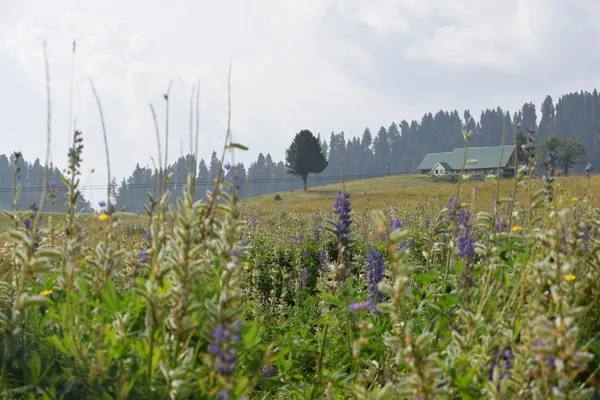
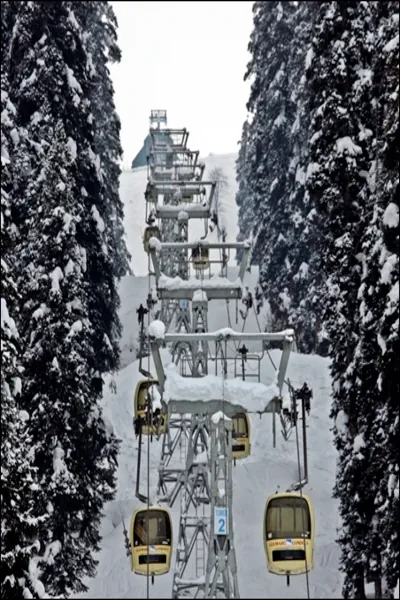
Gulmarg is splendid in July and August. The meadows are covered in emerald alpine grass, wildflowers carpet the golf course, and cool mountain breezes keep temperatures around 18°C. Morning Gondola rides to Kongdoori and Apharwat operate smoothly on clear mornings.
2. Aru Valley & Betaab Valley (Pahalgam)
The Lidder River swells with glacial meltwater, turning into a roaring turquoise spectacle. Betaab Valley’s manicured lawns and weeping willows are at their most vibrant green.
3. Gurez Valley (Bandipora)
July and August are the absolute prime months to visit Gurez. The Razdan Pass is completely snow-free, the Kishanganga River flows crystal-clear, and the remote wooden villages of Tulail are bathed in summer sunlight.
Practical Packing and Safety Rules
- Lightweight Rain Gear: Carry a compact, packable rain jacket or breathable poncho in your daypack. Avoid heavy PVC raincoats that trap body heat in humid weather.
- Waterproof Footwear: Pack quick-drying trail walking shoes with deep rubber treads. Wet wooden footbridges and stone garden stairs can become very slippery after an afternoon drizzle.
- Avoid Camping Directly on Riverbanks: In monsoon, cloudbursts high in the alpine glaciers can cause mountain streams (like the Lidder or Sindh) to rise rapidly without warning. Always pitch tents on elevated ground well away from active riverbeds.