Short answer: Kashmir is home to some of the world’s most celebrated handicrafts: Pashmina shawls, Sozni and Kani embroidery, hand-knotted carpets, papier-mâché, walnut-wood carving and copperware. Travelihood’s Kashmir Handicrafts Tour, the first special-interest craft tour of its kind in Kashmir, takes designers, fashion students and craft lovers into the homes and workshops of master artisans in Srinagar to see each process first-hand, learn from the makers and explore design collaborations.
Quick Facts
| Parameter | Details |
|---|---|
| Who it is for | Fashion and textile designers, design students and faculty, craft enthusiasts, bloggers |
| Where | Srinagar’s old city workshops and nearby craft villages |
| Crafts covered | Pashmina, Sozni, Kani, Tilla, Crewel, carpets, papier-mâché, walnut wood, copper |
| Format | Guided workshop visits, artisan sessions and an English-speaking mentor-interpreter |
| Certificate | Participation certificate, authorised by the Director of the Craft Development Institute (CDI), Srinagar |
| Best season | March–June and September–November |
| Last verified | November 2026 |
Why Kashmir’s Crafts Are So Distinctive
For centuries, Kashmir sat on trade routes linking Central Asia, Persia and the Indian subcontinent. Merchants, scholars and artisans who passed through, especially from Persia, left a lasting mark on Kashmiri language, food, dress and above all its crafts. Many techniques still practised today, such as papier-mâché and carpet weaving, were refined under the influence of Persian masters and have been passed down within families for generations.
The Crafts of Kashmir
Pashmina shawls
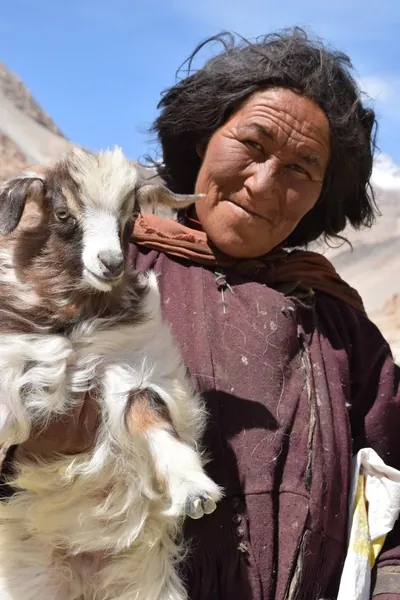
Kashmir’s most famous export starts with the fine undercoat of the Changthangi goat, raised by nomadic herders on the high plateaus of Ladakh. Making a Pashmina shawl involves a chain of specialist hands:
- Collecting and cleaning the raw fibre
- Hand-spinning it into extremely fine thread, traditionally done by women on a wooden wheel (yender)
- Weaving on handlooms in family rooms or community workshops
- Tracing design outlines onto the plain shawl, ready for embroidery
- Embroidery, the most time-consuming and costly stage, worked carefully so the delicate fabric is never punctured
- Dyeing and a final wash and finish before the shawl reaches the market
A single shawl can take anywhere from two weeks to two years, depending on the embroidery. Genuine Kashmir Pashmina carries a Geographical Indication (GI) tag. Learn to tell the real thing in our Pashmina, saffron and walnut wood buying guide.
Sozni embroidery
Sozni is Kashmir’s finest needlework: delicate satin-stitch motifs of paisleys, chinar leaves and flowers worked in silk or fine wool thread, usually on Pashmina. The best pieces are so dense that the design looks almost the same on both sides. A heavily embroidered jamawar shawl can take a single artisan many months.
Kani shawls
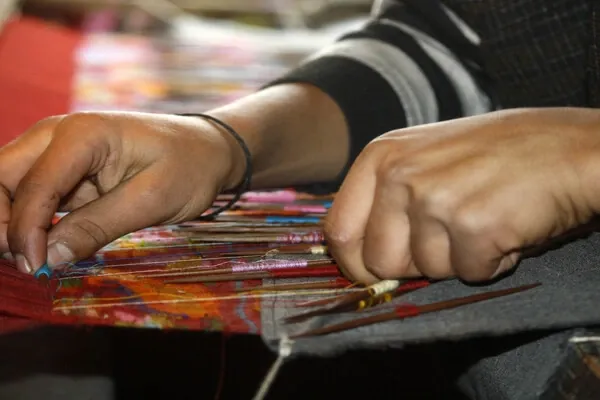
Kani shawls are woven, not embroidered. Weavers use small wooden bobbins (kanis) to build the pattern thread by thread, following a coded script called the talim. The centre of Kani weaving is Kanihama, near Srinagar.
Tilla work
Tilla is embroidery in metallic thread, traditionally silver or gold-coloured, often worked on pherans and velvet. It is a favourite for bridal and festive wear.
Crewel work
Crewel uses coloured woollen yarn chain-stitched onto cotton or wool backing to make cushion covers, curtains, bags and furnishings, often with bold floral patterns.
Papier-mâché
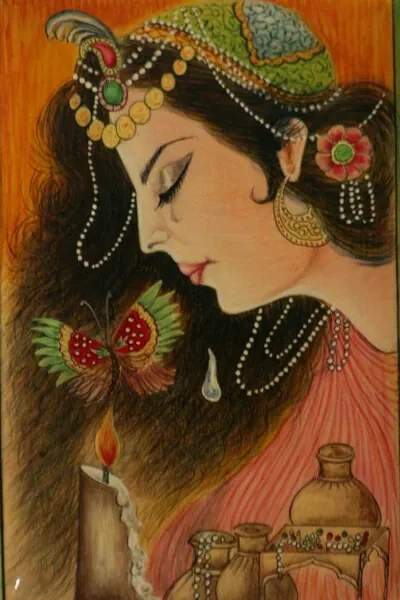
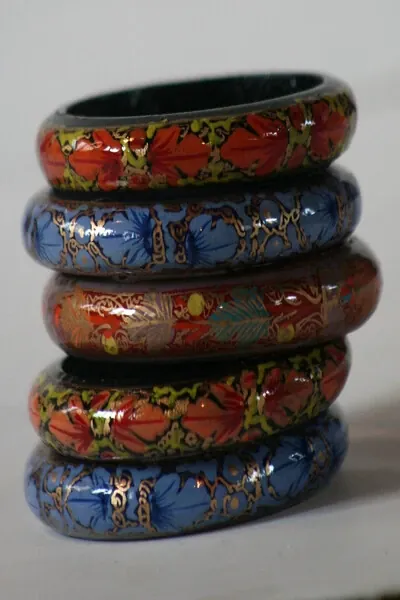
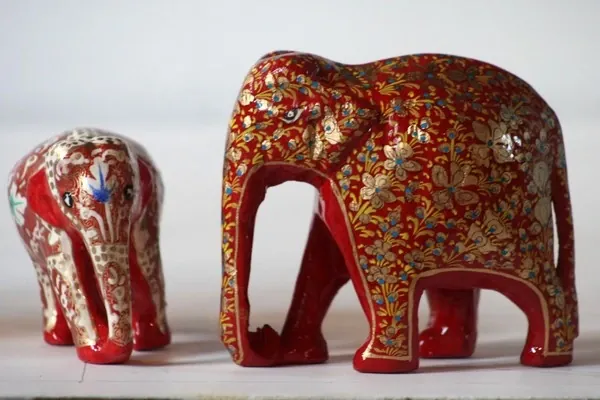
Papier-mâché reached Kashmir from Persia and is still thriving. Waste paper is soaked and pounded with natural glue into a pulp, moulded into boxes, vases and ornaments, then dried in the open air for several days. Each piece is filed smooth, hand-painted with flowers, birds, arabesques or calligraphy, and lacquered to a glossy finish. The same painting style also decorates wood, metal and walls.
Carpet weaving
Kashmiri hand-knotted carpets, in silk, wool or a blend, are woven on large looms, often by whole families working on one carpet together. The weavers follow the talim, a coded pattern prepared in advance by a specialist designer, which is chanted aloud as the knots are tied.
Walnut-wood carving
Kashmiri walnut wood is dense and beautifully grained. Carvers chisel it into intricate screens, boxes, tables and trays, often in deep relief with chinar leaves and vines, before polishing it to a warm sheen.
Copperware
In the old city’s copper bazaars, coppersmiths hammer and engrave samovars, tasht-naari (hand-washing basins) and serving dishes by hand, then often tin them for daily use.
The Artisans: The Unsung Heroes
Kashmir’s craftspeople are some of the most skilled in the world, yet many earn very little and receive little public recognition. Middlemen, cheap machine-made imitations and unstable incomes have pushed many master artisans to discourage their own children from learning the craft. Some techniques are at real risk of disappearing within a generation.
Much of the work still happens in community halls and family rooms. Groups of women embroider together, sometimes singing as they work, and whole households gather around a single loom to meet a delivery.
About the Kashmir Handicrafts Tour
Travelihood pioneered special-interest craft tours in Kashmir. This was the first tour of its kind in the valley, and we created it to help keep these crafts alive by connecting artisans with the designers who can bring them to new audiences.
What you will do
- An induction session on the history and journey of Kashmiri crafts
- Visits to working studios: spinning, weaving, Sozni and Kani, papier-mâché, carpet looms, woodcarving and copper workshops
- Conversations with master artisans, with your mentor interpreting from Kashmiri and Urdu into English
- Time to sketch, document and discuss design ideas, including fusion concepts that combine Kashmiri techniques with contemporary design
- A participation certificate, authorised by the Director of CDI Srinagar
Why take the tour
- See every stage of a craft, rather than only the finished product in a shop
- Find inspiration and potential production partners for your own collections
- Support artisans directly and help their work gain national and international recognition
- Take part in a genuine cultural exchange, and come home with new knowledge and a new perspective
Your mentor Each group is led by a professional mentor with craft expertise and good spoken English. They plan the visits, run the induction and translate throughout.
Partners and Institutions
Our tours work alongside Kashmir’s craft institutions, including the Department of Handicrafts & Handloom, Jammu & Kashmir, which supports artisan registration, training and workshop schemes, and the Craft Development Institute (CDI), Srinagar, which runs programmes to improve design, quality and market access for local artisans.
Who Can Join?
The tour is open to all art and craft lovers. It is designed especially for:
- Professional fashion and textile designers
- Fashion and design students
- Faculty and staff from design schools, colleges and universities anywhere in the world
- Fashion bloggers and craft writers
We also arrange custom group programmes for institutions.
Ready to plan your tour? Contact us for dates, group sizes and custom programmes.
Photo gallery